Cat Body Language Cheat Sheet: Read Tails, Ears & Meows
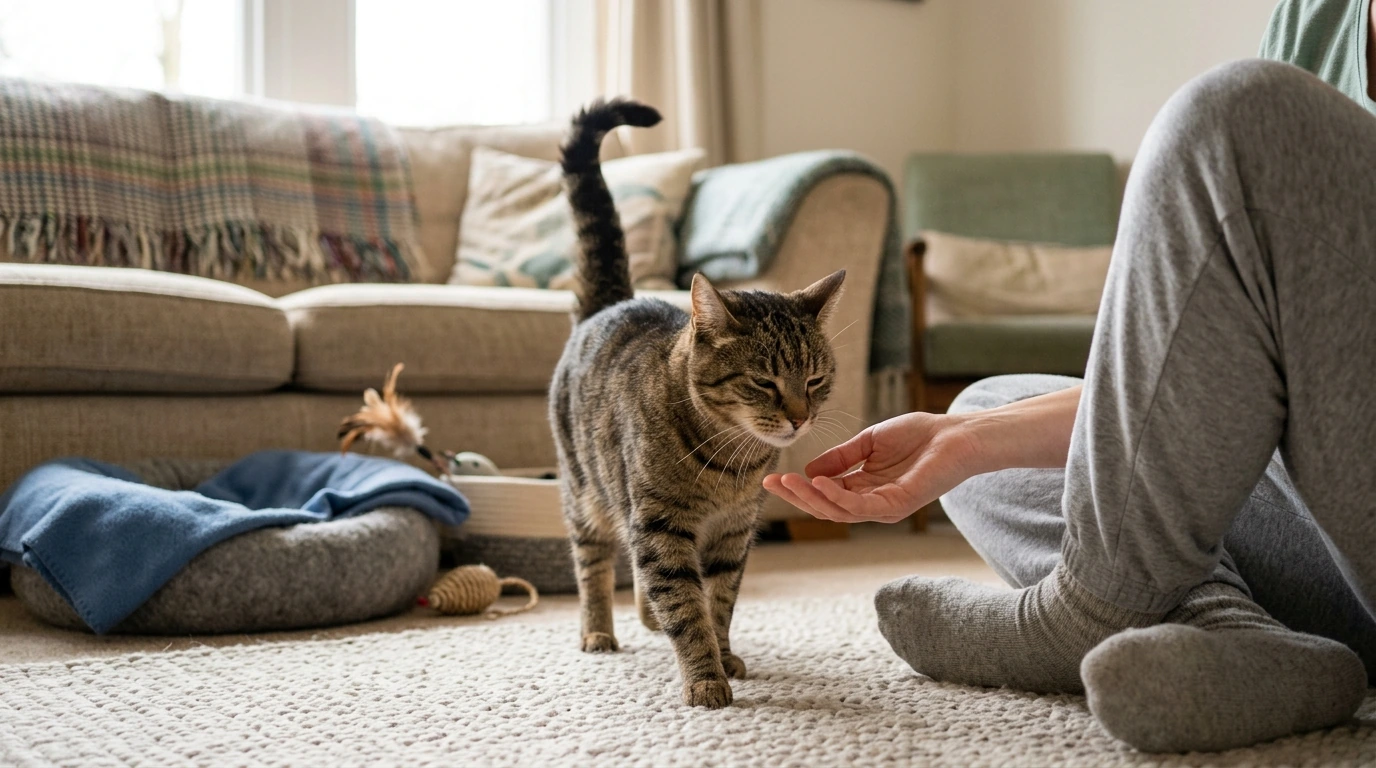
Cat Body Language & Behavior Cheat Sheet: Decode Signals, Postures, and Meows
Cats communicate with a layered mix of posture, facial cues, tail and ear positions, and vocalizations. Learning to read these signals helps reduce stress, prevent bites or scratches, and build trust—especially during introductions, play, and handling. Use this guide as a quick reference, then reinforce what’s learned with a printable cheat sheet for day-to-day situations.
How cats communicate: the full picture
Cat communication is a moving target because signals change with environment, history, and what’s happening in the moment. Body language usually speaks first: posture, movement speed, and muscle tension often reveal comfort or concern before a single sound happens.
Context can flip meanings. A meow at the food bowl is often routine-driven; that same meow in the carrier or at the vet may be stress or frustration. Aim to read “clusters” of cues—ears + eyes + tail + stance—rather than relying on one sign.
Distance matters, too. Many cats ask for space subtly (a pause, a head turn away, a slightly tense body) before escalating to swats, hissing, or biting. Respecting early signals keeps interactions safer and calmer.
Relaxed and friendly signals
A relaxed cat tends to look “loose” rather than held tight: soft face, normal breathing, smooth movements, and a body that isn’t bracing for impact. When a cat feels safe, approach behaviors are often easy to spot.
- Slow blinks: commonly used as a calm, affiliative signal. Returning a slow blink can help maintain a peaceful interaction without crowding the cat.
- Tail upright with a gentle hook: often a friendly greeting or a confident approach, especially when paired with a relaxed body.
- Head bunting and cheek rubbing: scent marking that typically signals comfort and social bonding (you’re “part of the group”).
If a cat is approaching with an upright tail and soft posture, let them close the distance and initiate contact. Friendly cats still appreciate choice: offer a hand to sniff, then pet briefly and pause to see if they ask for more.
Stress, fear, and “please give space” signals
Stress signals can be quiet and easy to miss, especially in busy households. Watch for a body that tightens, a cat that freezes, or a sudden stop in normal movement—these are often early warnings that the interaction needs to slow down.
- “Airplane ears” (turned sideways) or ears flattened back: discomfort, fear, or defensive readiness.
- Dilated pupils + tense crouch or freezing: arousal is rising; pause handling and reduce stimulation.
- Tail tucked close + low posture + hiding: the cat feels unsafe and is trying to disappear.
- Hissing, growling, spitting: distance-increasing warnings. Avoid reaching in and offer an escape route instead.
If fear is building, prioritize safety: create space, lower noise, and avoid cornering. For foundational behavior guidance, reputable resources like the ASPCA Cat Care library can help you sanity-check what you’re seeing and plan calmer routines.
Overstimulation and play vs. aggression
Overstimulation is a common reason “sweet” petting turns into a sudden bite or swat. It’s not spite—often it’s a threshold issue: the cat’s nervous system gets too amped, and they need the interaction to stop.
- Overstimulation clues: fast tail lashing, rippling skin, sudden head turns toward your hand, tense shoulders, or a stiffened posture during petting.
- Play vs. aggression: play usually looks bouncy with loose transitions (start/stop, brief pauses). True aggression tends to be rigid, intense, and direct, with harder staring and less “wiggle.”
- Better redirection: use a wand toy or toss a kicker toy so hands don’t become targets.
- Prevent repeat bites: keep petting sessions shorter and stop at the first warning cue rather than waiting for a nip.
Face, ears, eyes, and whiskers: the micro-signals
Quick read: common signals and what to do
| Signal cluster | Likely meaning | Best response |
|---|---|---|
| Upright tail + relaxed body + slow blink | Comfort and friendly engagement | Offer gentle interaction; let the cat approach and initiate contact |
| Ears sideways + crouch + wide pupils | Uncertainty or fear building | Stop reaching; lower noise; increase distance; give an exit route |
| Tail lashing + tense shoulders + skin twitching during petting | Overstimulation | Pause petting; switch to play with a toy; keep sessions shorter |
| Puffed tail + arched back + sideways stance | High fear/defense | Do not corner; remove triggers; allow hiding; consider calming routines |
| Kneading + purring + relaxed posture | Contentment (sometimes self-soothing) | Provide a soft surface; keep interaction calm; respect boundaries |
| Stiff posture + direct stare + low growl | Escalating threat | Back away; separate pets if needed; avoid punishment; reassess triggers |
Meows and other sounds: what vocalizations can mean
For additional behavior basics and health-adjacent context, the Cornell Feline Health Center is a strong reference point.
Using a printable cheat sheet at home
Printable Cat Body Language & Behavior Cheat Sheet
If you want a ready-to-use reference designed for quick decoding of feline signals, postures, and common meows, start here: Printable cat body language and behavior cheat sheet. It’s especially helpful for households with new cats, multi-cat dynamics, or kids learning gentle handling.
For calmer day-to-day routines (especially during transitions, travel, or vet days), some pet parents also like supportive self-care tools such as Meditations for Self-Love & Worthiness | Audio Course and a practical lifestyle reset like Whole You: Holistic Wellness Guide—because calmer humans tend to create calmer cat interactions.
FAQ
How to understand your cat’s body language?
Read clusters of cues (ears, eyes, tail, posture) in the context of what’s happening. Start with body tension (loose vs. tight), then confirm with ear and tail position; when tension rises, give space, and when relaxed, let the cat initiate contact.
What does a flicking tail mean in cats?
A slow, gentle swish can signal mild interest, but sharp or rapid tail flicks often indicate rising arousal or irritation. If it happens during petting or play, pause and reduce stimulation before it escalates.












Leave a comment